Testing and measurement
Presell-to-sale conversion
Measure a presell by the sales (or revenue) it produces per presell visitor, and per ad click if you buy traffic, split by traffic source and by presell variant. There is no universal good presell conversion rate, so the useful comparison is your own variants against each other on the same source.
This guide sets out the events, the formulas and the reports that make a presell measurable. It draws on analytics documentation, published affiliate tracking guides and practitioner discussions; it reports no campaign results of our own (see how we research guides). The numbers in it are worked examples, marked as such.
What presell-to-sale conversion means
A presell is any page between the ad and the order page: an advertorial, a listicle, a quiz, a short bridge page. The sale is the purchase, or the approved lead if that is what you are paid on. A click to checkout is a step on the way and does not count as the sale.
Two other numbers get confused with it. Presell click-through is the share of presell visitors who click to the order page. Order-page conversion is the share of order-page visitors who buy. Neither tells you whether the presell earned its place, because the two multiply. OpenAdLibrary puts it as net conversion rate = (pre-lander click-through rate) × (offer page's conversion rate on warmed traffic). A presell that sends fewer, warmer readers can lift the second number while cutting the first, and only the product shows which effect won.
The events to measure, whatever your stack
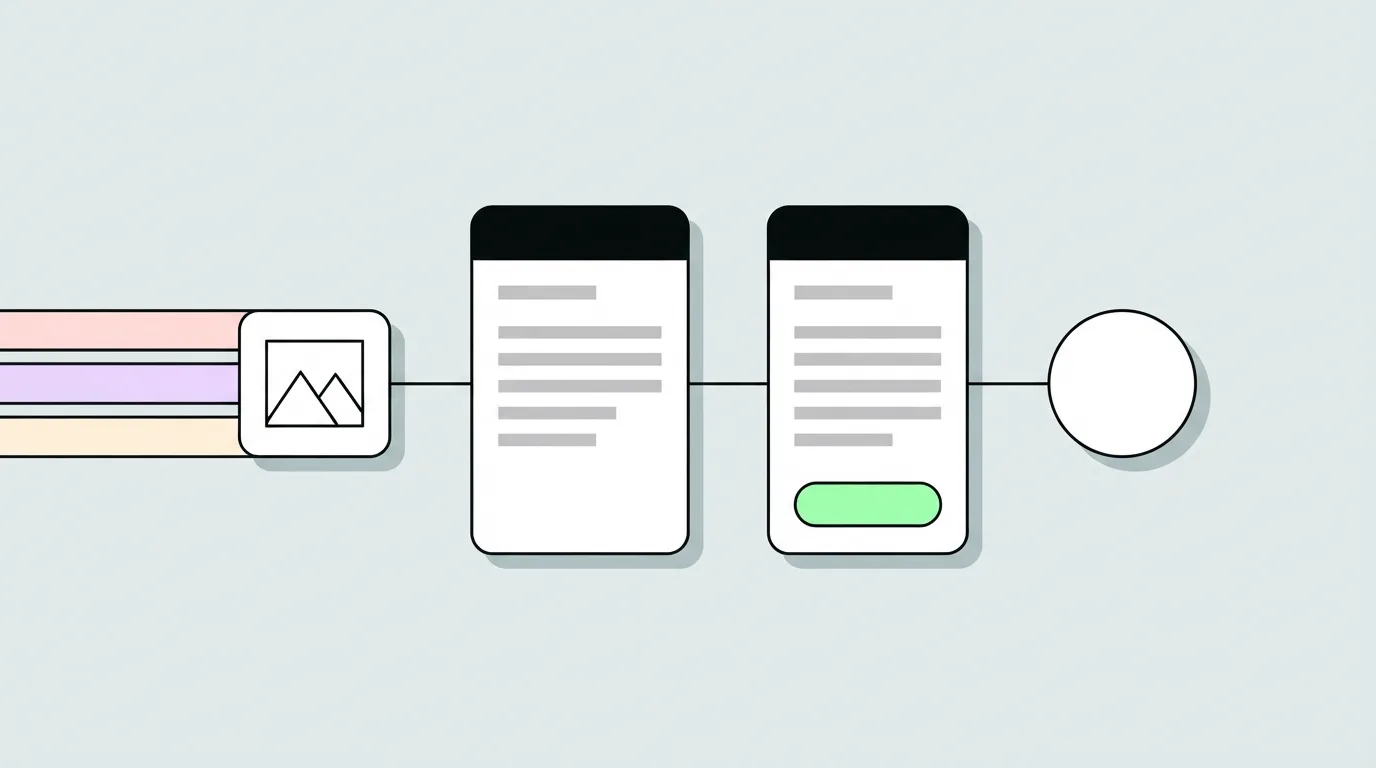
Tracked.it lays out the affiliate chain as "Ad click → prelander visit → CTA click → offer visit → sale postback", and the same hops apply when you own every page. Record one event per hop:
- Ad click. From the ad platform or your tracker. Your denominator for earnings per click.
- Presell view. The visitor reached the presell, with its variant attached.
- Click to the order page. The presell's call to action fired.
- Purchase. Fired on the thank-you page or returned by postback, carrying the same visitor or click ID.
From these you get three rates: presell view to order click, presell view to sale, and, where you can see it, order-page conversion. Skip the middle steps and you lose the one thing the presell test needs. As Adtraxo's lander tracking guide warns, "Without tracking, you see a conversion event but have no idea if the lander helped or hurt."
If you own the funnel: presell and checkout in one place
Vendors who run the presell, the order page and the checkout can follow one visitor ID from the ad to the transaction. Store the presell variant and the traffic source on that visitor at the first page view, and make sure the purchase event carries both.
For the source, tag every ad URL. Google's help page on UTM parameters is direct about it: "When you add parameters to a URL, you should always use utm_source, utm_medium, and utm_campaign." In that scheme utm_source is the referrer (a platform or a newsletter) and utm_medium is the channel, such as cpc or email. Google Analytics then shows session source, medium and campaign in the Acquisition, Traffic acquisition report, where you can read purchases against them.
One limit to plan around: GA4 reports by session, and its landing-page view assumes the presell is the first page of the visit. If your presell sits behind a quiz or another page, send the presell view and the variant as events of their own and build the report from those, rather than relying on the default landing-page report. The exact setup depends on how your events are configured.
If you are an affiliate: the merchant owns the order page
An affiliate cannot put a tag on the vendor's checkout, so the link between presell and sale is the click ID. Your tracker creates it on the ad click, the presell's button passes it into the network's sub-ID field on the offer link, and when the sale happens the network's postback returns it to the tracker. The field names differ by network; the pattern is the same everywhere.
Use the remaining sub-ID fields for the dimensions you will want to cut by. Adtraxo's example maps sub1 to the traffic source ("sub1: Traffic source ID (e.g., PropellerAds = 1, EvaDav = 2)"), with the others carrying placement, creative and lander version. Pick a mapping once and keep it for every source, or the reports will not line up.
The network dashboard alone is the wrong place to judge a presell. Its conversion rate blends every source and every variant you send, so a strong presell on one source can hide a weak one on another.
Measure presell to order page conversion
Presell to order page conversion is order-page clicks divided by presell sessions, for each source and each variant. It is the fastest number to move and the easiest to read early, which is exactly why it misleads.
Tracked.it's advice is blunt: "Do not optimize only for prelander CTR." Remoby frames the two numbers as "EPC is the scorecard. CTR is the warning light." A presell whose click-through climbs while earnings per click fall is sending curious readers who were never going to buy. Use the click-through rate to spot a broken page or a mismatched angle, and settle the test on sales. The same discipline applies to format tests, covered in VSL presell or text presell: which to run first.
Measure landing page to sale conversion, end to end
The end-to-end number is sales divided by presell visitors, by source and variant. If you buy traffic, add sales or revenue divided by ad clicks, which is earnings per click (EPC) when you work on commission.
EPC per ad click is the fairer score when one arm of a test has a presell and the other goes straight to the offer, because the two arms have a different number of pages. OpenAdLibrary's rule for that test is "Score on end-to-end EPC. Earnings per ad click is the only metric that survives the funnel-shape difference between arms." Wait for enough sales on each arm before you call it.
A worked example, with invented numbers: presell A gets 1,000 visitors, 300 order-page clicks and 9 sales; presell B gets 1,000 visitors, 180 clicks and 11 sales. A wins on click-through (30% against 18%), B wins on presell-to-sale (1.1% against 0.9%). At equal payout and equal ad cost, B is the better page.
Conversion per traffic source: how to read it
Split by source before you compare anything with anything. A thread on r/analytics about low landing-page rates got the reply that you "shouldn't judge landing page performance without considering traffic source quality" and should segment by social, email and paid before deciding to test. Native, Facebook and email traffic arrive with different intent, and one blended rate averages them into a number that describes none of them. Remoby gives the same instruction for presells: "Watch EPC by source and subID, not headline CTR alone."
Keep the tagging clean: one utm_source value per platform, always the same spelling and case, and no untagged ads. Visits that arrive without UTMs end up with no source to report against, and every one of them is a sale you cannot credit.
The report to keep has one row per source (or source and sub-ID) and one per variant inside it, with these columns:
- Presell sessions
- Presell to order page rate
- Sales
- Presell to sale rate
- Revenue, or EPC per ad click
- Refunds or rejected leads, where you get them
Read across a row to see where the presell loses people, and down a column only within one source.
Mistakes that make the numbers lie
- Optimising presell click-through while EPC falls. The page looks better every week and earns less.
- Judging the order page on its own rate. A presell filters traffic, so the order page's rate rises or falls with what the presell sends it, and the change says little about the order page itself.
- A broken click ID or postback. Sales arrive with no source attached and the best source looks like the worst.
- Several variants or sources behind one URL with no sub-ID. The tracker can count them but cannot separate them.
- Changing the ad's destination URL to switch presells. The ad can go back through review and the two periods see different traffic. Rotate variants behind one URL instead; landing page split testing for presells covers how, and the testing and measurement hub collects the rest.
Where to go next
For the page itself, the presell and bridge page structure hub sets out the formats. If your presell is a quiz, the result page is one more hop to tag: how to build a quiz funnel for paid traffic lists the events to fire. Or browse all presell guides.