Presell and bridge pages
Bridge pages for affiliate offers
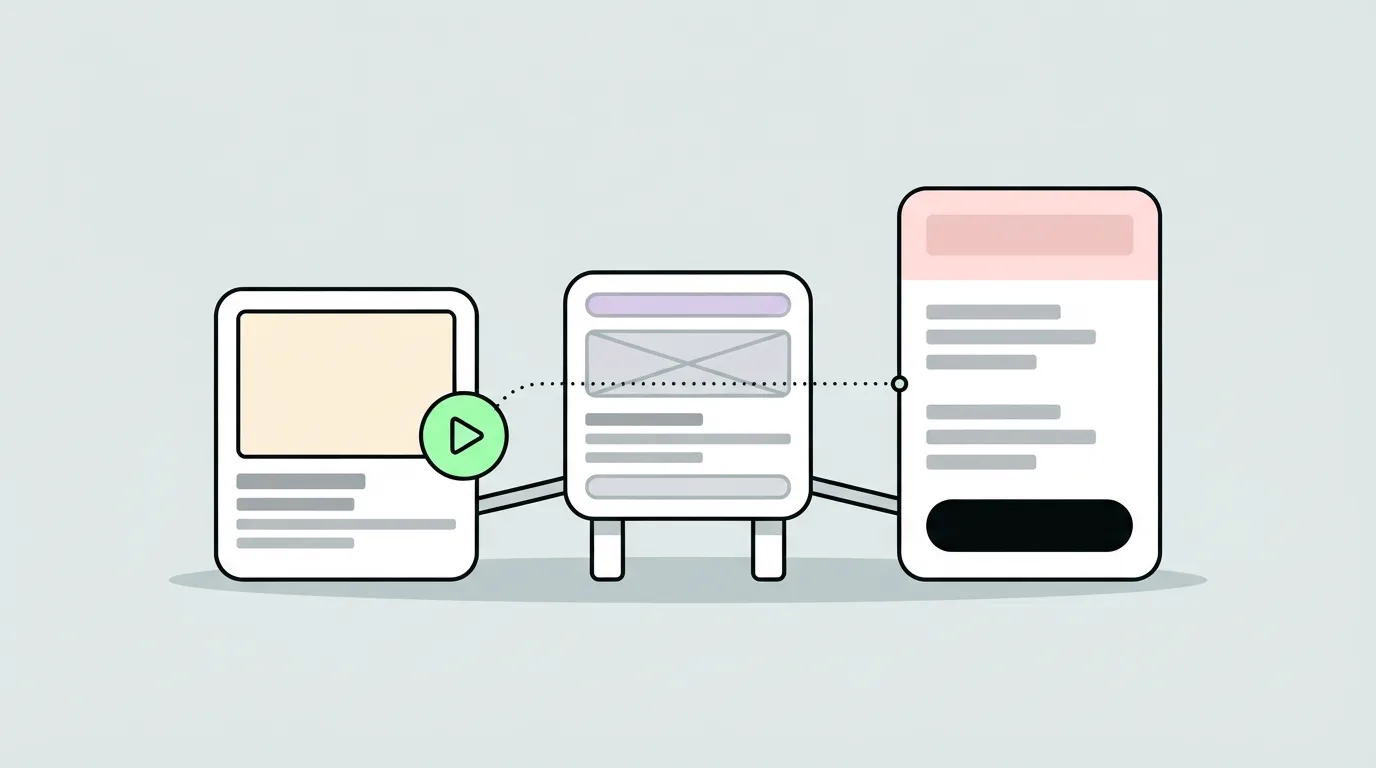
A bridge page is a page on your own domain that sits between the ad or post someone clicked and the merchant offer you promote. Put six things on it: a headline that repeats the ad promise, a short paragraph of context, two or three pieces of proof, a visible affiliate disclosure, one button that says exactly where the reader goes next, and a footer with privacy, contact and terms links.
This guide is built from ad-network policy pages, FTC guidance and published affiliate practitioner guides. It reports no campaign results of our own; how Presellbook researches and writes guides explains the method.
What is a bridge page in affiliate marketing?
AffBuddy's glossary gives the plain definition: "a standalone landing page on your own domain that sits between an ad (or social link) and the affiliate offer." The visitor clicks your ad, reads your page, then clicks your affiliate link to the vendor's sales page. You control the first page and none of what comes after it, which is the whole reason the bridge exists: it is the only place in the funnel where an affiliate can add an angle, a bonus or an answer to an objection.
Three names get used for the same URL. The same glossary separates them by emphasis: "bridge = the compliance requirement, pre-sell = the persuasion strategy." An advertorial is the long, article-styled version of a presell. NicheAvenue calls the presell "the middleman between your content and the actual affiliate product", and notes that some people call it a bridge page. On this site we use "bridge" for the short page and "presell" for the longer one.
A bridge is also a landing page, though the reverse does not hold. In AffBuddy's words, "All bridge pages are landing pages; not all landing pages are bridges." A landing page can collect leads or sell your own product; a bridge exists to hand the visitor on to someone else's offer.
If you searched "bridge page" alone, most results are about unrelated things (care services, colouring pages, place names). Everything here is about the affiliate meaning.
Why not link straight to the offer?
- Ad networks review the destination. AffBuddy's glossary summarises how Google, Meta, Microsoft and TikTok limit sending ads straight to an affiliate link. Treat that as an industry summary and read each network's own policy for your account; the rules differ in detail and change.
- Communities punish naked affiliate links. ClickBank's guide to Reddit tells affiliates: "Instead of posting your affiliate links directly, use an affiliate bridge page, a blog post, or a YouTube video where you provide additional value before directing them to the product through your affiliate link." A reply in r/Affiliatemarketing to someone whose Amazon links from Reddit were not converting said the same thing more briefly: "Point the links to your presell page on your website instead."
- Cold visitors need a reason to keep reading. Someone who clicked an ad a few seconds ago has not decided anything. The bridge frames the offer in your voice before the vendor's page asks for money.
- The vendor page is fixed. You cannot change the merchant's headline, add your bonus to their checkout or answer the objection your traffic actually has. The bridge is where that goes.
ClickBank's version of the funnel is a fair summary of the pattern: "start with a traffic source, route the traffic through some kind of bridge page, and include your affiliate link over to the sales page."
What to put on a bridge page for affiliate offers
In order, top to bottom:
- A headline that matches the ad. AffBuddy's checklist starts here: "the user clicked expecting a specific outcome, give them that outcome immediately." If the ad said "a pan that stays non-stick without a coating", the headline says that too, in close to the same words.
- Context, in one to three short paragraphs. The problem the reader has, why the usual fixes fall short, and what this product does differently. NicheAvenue's beat list opens with a hook headline and a relatable setup before any benefits.
- Proof, two or three pieces. Pick the strongest signals you can stand behind: a specification, the guarantee the merchant offers, a demonstration, a real review you are allowed to quote. Three strong signals read better than eight weak ones.
- The affiliate disclosure, near the first link. One plain sentence that you earn a commission if the reader buys. If the page is styled like an article, label it as an ad near the top as well: the FTC's native advertising guide says disclosures "should be placed as close as possible to where they will look first."
- One call to action that names the next step. "See the price on the official site" tells the reader what happens when they click. "Click here" does not, and NicheAvenue's list ends on a benefit-led button for that reason. Repeat the same button at the bottom for readers who scroll.
- A trust footer. Privacy policy, contact page and terms. Ad reviewers look for them, and AffBuddy's checklist includes them.
An email opt-in is optional. Add one only if you actually send to that list; a form you never use is friction on the way to the offer.
Affiliate bridge page example
Here is one annotated example, for an invented product: a kitchen timer called "Steady Timer", promoted through a native ad whose hook reads "The kitchen timer that tells you when the oven is actually hot".
- Top bar: "Advertisement" in small but readable type, because the page reads like an article.
- Headline: "This timer waits until your oven is actually hot", which repeats the ad's promise.
- Context: two short paragraphs. Oven dials say the temperature is reached before it is; most timers count from when you press start; Steady Timer has a probe that starts the count when the oven reaches heat.
- Proof: three bullets with the probe's range, the guarantee period the merchant states, and what is in the box. If you add a review, use a real one and say where it came from; on a demo, label it as a sample.
- Disclosure: "We earn a commission if you buy through the button below," directly above the button.
- Button: "See Steady Timer's price on the official site", then the same button again after a short FAQ.
- Footer: privacy, contact, terms.
That is roughly 300 words of copy, which suits a cheap, simple product. A copy-paste bridge page built to this pattern is planned for the example presell pages with teardowns; today the library holds an advertorial you can study for the same labelling and section order.
When you need a full presell page
A short bridge works when the offer is simple and the vendor's page does the selling. When it does not, the bridge grows into a presell page for affiliate marketing proper, and its length should follow the offer's complexity. AffBuddy's rule of thumb: "A $20 product needs a 500-word page. A $2,000 program benefits from 2,500+ words." Move from a bridge to a full presell when:
- the price is high enough that readers arrive with objections you have to answer;
- the product is software or a programme whose value needs explaining;
- you are adding a bonus and need room to describe it;
- the vendor's sales page is weak, so more of the persuading falls to you.
Once you know you need a longer presell, the next choice is format. VSL presell or text presell: which to run first covers video against text, and how to build a quiz funnel for paid traffic covers the quiz version. Whichever you test, judge it on sales or earnings per click by source, which measuring presell-to-sale conversion explains; a bridge with a high click-through can still send readers who never buy.
Mistakes that get bridges rejected
- A page that only links out. Google's ads policy lists, among destinations it does not allow, "Bridge pages, doorways, gateways, or other intermediate pages that are only used to link to other sites". The fix it gives is to "Focus on providing the user with useful, unique, and original content on your landing page." A headline and a button is the thin page that policy describes; context and proof are what make the page worth visiting on its own.
- One template copied across dozens of offers. Swapping the product name into identical copy produces the same thin page many times over. Write each bridge for its offer and its traffic.
- Cloaking or hidden redirects. Showing reviewers one page and visitors another, or redirecting automatically to the offer, is on AffBuddy's list of things to avoid.
- Claims the merchant does not make. If the vendor does not say it, you cannot support it either. The same goes for invented testimonials.
- Disclosure only in the site footer. On a standalone bridge, the commission sentence belongs near the first affiliate link, and an article-styled page needs its ad label near the headline.
The advertorial and presell compliance hub covers labels, endorsements and what networks check in more depth.
Where the bridge sits in your presell library
The bridge is the shortest format in a range that runs through listicles, quizzes and VSL pages to the full advertorial. The presell and bridge page structure hub lays the formats side by side, the advertorials hub covers the long end, and all presell guides are listed newest first.